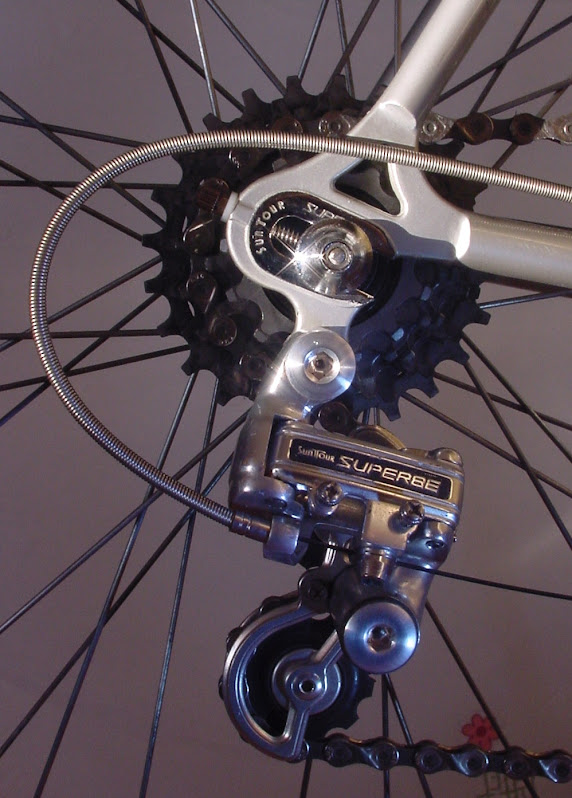
Click on Image for Enlarged Views & Click Back Arrow to Return
Bike Restoration and Riding
(Updated August 12, 2026)
|
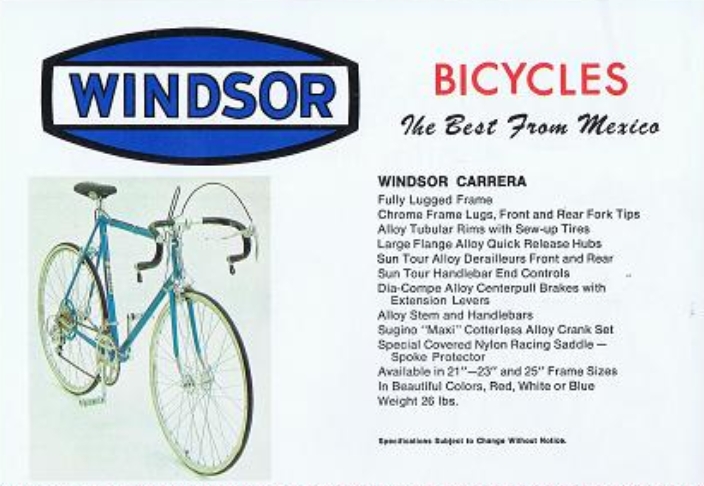
The Windsor hardware was nothing
special, but also not junk. They used
mid-level Japanese components throughout with the
shifting hardware all from
Suntour. If you got here via my
page that describes my progress in my other hobby
'Ham Radio' you will recall I had worked for a
Japanese electronics company for over twenty
years. In that time, I really got to
appreciate the quality engineering that came out of
that country and the the friends I've made that were
part of that system. When I restarted my
bicycling activities in 2014 it was natural for me
to also take interest in the vintage Japanese road
bikes that were produced in the 1970's and 1980's
time frame. In today's world of carbon fiber
eBiking, specializing in the restoration and riding
of older higher end steel bikes is a unique niche.
When I started to ride again I had an SR bike. The SR bike was a product out of California in the SanDiego area. This companies location has a tie to my old Windsor bike. In the early 1980's while living in the Los Angeles area, the frame on my Windsor had been compromised by an earlier accident. One day the frame just split and a new replacement was sought. A local repair shop talked to the people at Windsor and for some reason that company would not sell Windsor frames only. However, the same group also ran SR Bikes and they would sell me a new frame. The SR replacement was a decent light frame, albeit the actual steel tubing used remained a mystery to me. At the time I was just looking to get my bike back on the road and the nitty-gritty details were not of concern to me at that time. Over the years I did update those old SR components. When I started my current bike adventure of steel bike restoration in 2014, I continued to update and improve that old SR. Before I forget, the letters 'SR' in those bikes has no discernible meaning. It is not, I repeat NOT, related to the Japanese SR (Sakae Ringyo) that made middle and high end bike components in Japan during that same time frame. Over the years of investigation they think the SR for this California based bike company was merely the initials of a founder. From 2014 through 2016 this SR shown below was my primary road bike. 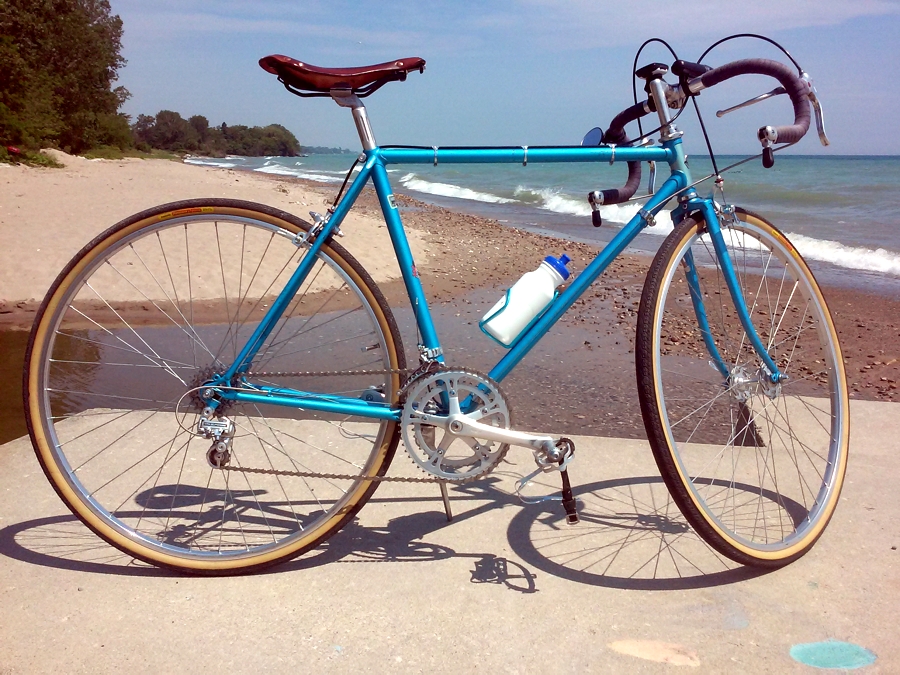 Click on Image for Enlarged Views & Click Back Arrow to Return The work I did on this SR was
the start of my bicycle restoration and general
maintenance education. I watched on-line
videos, bought and read books on how to set up
bikes and keep them on-the-road. As of the
writing of this, I have over ten years of work
experience rebuilding and keeping my daily riders
out there. Another thing my work has
done is given me a real appreciation for the
Japanese company Suntour. I won't
get into the extensive history of the Suntour
company, but just to say they were indeed a major
contributor to some of the technologies still
being used in the road bike industry to this
day. There is an excellent article written
by Frank J. Berto called The
Sunset of Suntour, which can be read
via the link in this sentence. Frank's
article gives a very detailed history and final
demise of the Suntour company.
One item that Suntour created, and will always
remain famous for, was their Slant-Parallelogram
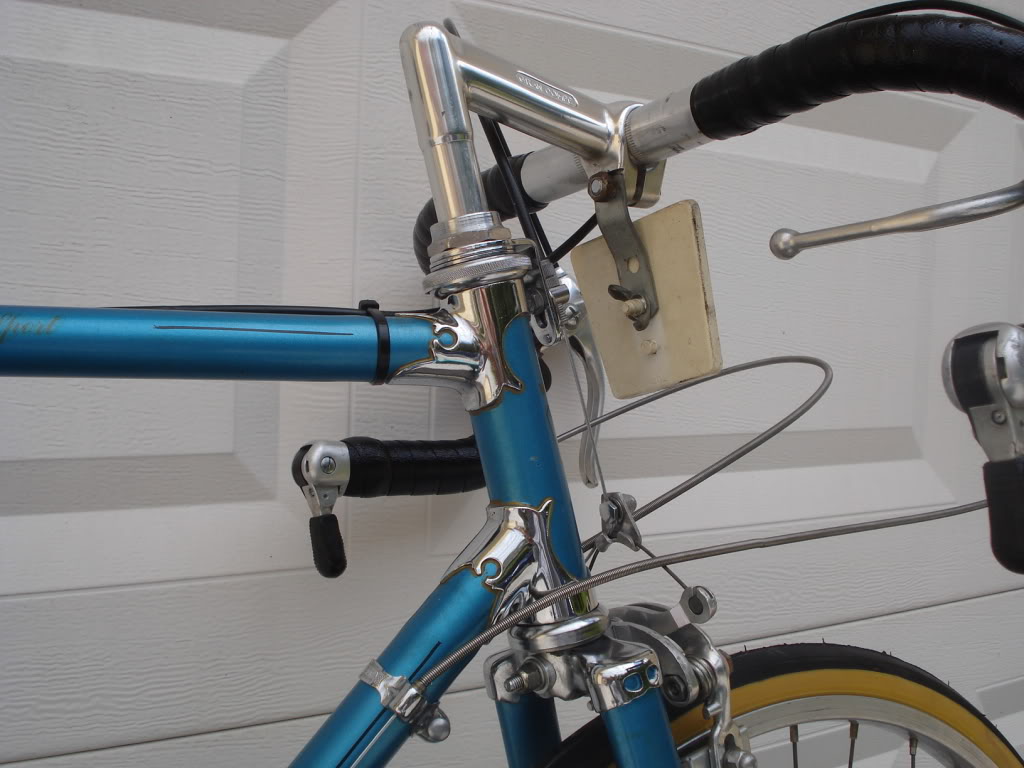
Rear Derailleur. The first
picture at the top of this page is a fine example
of Suntour's best early version of that
derailleur, the Superbe Pro RD-3100 friction
shifter. I used this later derailleur on
both my SR above, but also on the first full
restoration of a 1980 Fuji Newest (later). I
jumped on the Suntour bandwagon and used them
almost exclusively on my future road bike
projects. Returning to the
Slant-Parallelogram rear derailleur, Suntour held
the patent on that device from 1964 through
1984. It indeed made Suntour a king of the
derailleur world over that period of time.
Case in point, after their patent expired in 1984,
within the next three or four years, every other
rear derailleur manufacturer converted over to
that Slant-Parallelogram methodology or they went
out of business. Sadly without
that patent protection, the small sized Suntour's
years were numbered and within ten years they were
done!
Over the past ten years, I've refurbished and upgraded many bikes. Out of those I'm to the point now where I have three main riders that get road used during our biking season here in the upper midwest of America, or basically six to seven months out of the year. Here are my current main road bikes as of 2026. 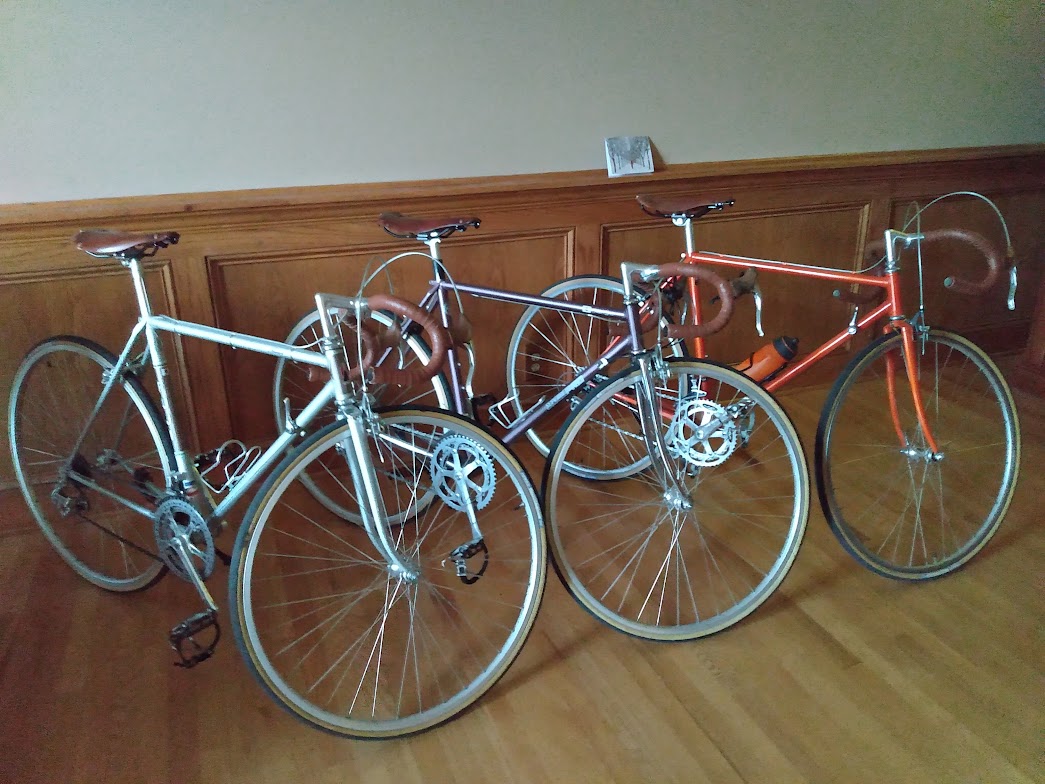 Click on Image for Enlarged Views & Click Back Arrow to Return The bikes were repaired and
restored in the order from left to right in the
above picture. Here is the specifics:
1980 Fuji Newest (Left)
- The Newest was Fuji's second best in
their road bike line up offered in America that
year. Only topped by their Professional
model. However, my refurbishment is what I
call 'A Fuji Professional in Newest
Clothing'! First the tubing used on their
Professional and the Newest was the same
Fuji 331 Double-Butted CrMo Steel
tubing. Very light weight! Most
higher end tubing used by Fuji were made by the
company Ishiwata
in Japan. Former employees of Ishiwata
eventually formed Kaisei after the prior closed
in 1993.
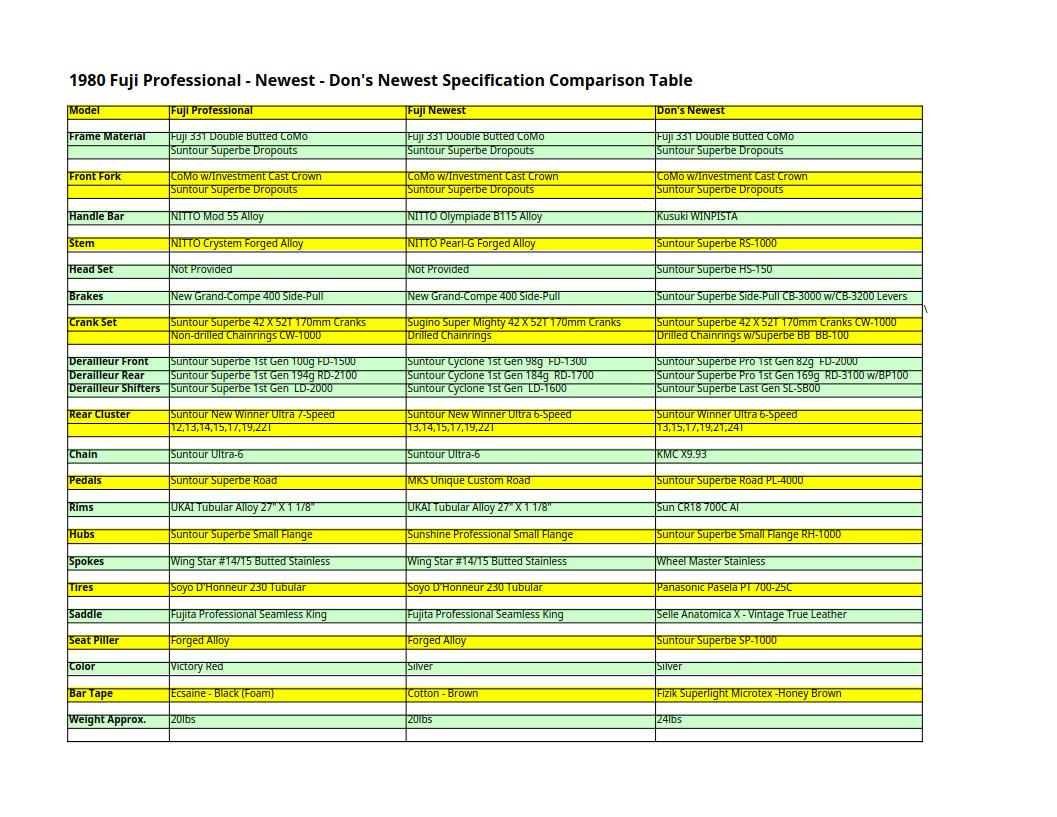 For those who are interested, I
will attest that the components I used on my Newest
refurbishment are of higher quality that those used
by Fuji in 1980. To be noted, Fuji was a big
user of the Suntour components. However, I
must explain in Japan there was two major bike
manufacturing associations in the 1960's moving
forward, the JEX (Japan Bicycle Parts Manufacturers
Group for Export Promotion) and the JBM (Japan
Bicycle Manufacturers Group). Each group had
their specific member companies and there was even a
few that crossed over into both. However, as
far are derailleurs are concerned the two Japanese
companies were Suntour and their main competitor
Shimano. Suntour was in the JEX and
Shimano was in the JBM! Most often if you
bought a bike it would use all components that were
made by members of one group or the other.
Again, there was some cross over too. At this
point I need to explain that Suntour really only
made derailleurs. True there were other bike
components branded with the Suntour name that
appeared in their catalogs, but those were custom
manufactured for Suntour by other members of the
JEX! Most often Suntour did offer a superior
product than the manufacturing company made for
their own branded sales, i.e. Suntour had other
manufacturers build them better components. As
a result those Suntour branded components would also
cost more that the OEM versions. So when Fuji
would use a OEM branded component it saved them
money over buying the same component in Suntours
top-of-the-line offering. During my
refurbishments I did not have such a cost savings
goal and I could buy the best that Suntour had to
offer, albeit on the used market. In the case
of my Fuji Newest, I essentially built a better
quality bike than their higher rung Professional
model. Notice also, at the top of
this page is the picture of the rear dropout on my
Newest and as can be seen even Fuji used Suntours
top end Superbe Pro dropouts on these frames.
An aside regarding Suntour vs Shimano. They were both great companies. Shimano was always a bigger company and had divisions in other sporting areas, fishing reels for example. When Suntour wanted a Suntour branded crank they went to Sugino to get them to make one special for them. However, when Shimano wanted to have a Shimano branded crank they just bought the other JBM member company, in this case they bought Takagi and from that point onward they were part of the Shimano Company and branded so. 1986 Fuji Fully Custom
(Middle) - The middle bike in the above
line-up was acquired at the end of 2017. Like
the Newest before it, this was also just purchased
as a frame only. It came to me with no
decals or affixed stickers. It was identified
as a Fuji via the serial number on the Bottom
Bracket ( C652 C6 = March 1986 Custom Manufacture
number 52) and the like dated Fuji branded fork
crowns. Since I was again going to
cover this bike in all things Suntour, I chose their
first, and last, generation of Indexed shifting rear
derailleurs, the RD-SB00-SSB Superbe Pro. On
all my Suntour equipped bikes I also use their
BP-100 bearing pully's. In this case they were
standard on the derailleur, but on my other bikes
these would have been separately added after.
One of my first jobs was an attempt to better identify the frame materials. During this time frame Fuji did hire out to other custom frame manufacturers to make some frames for them. They even had a series of frames that they sold less components. These later frames were labeled as their "Design Series". My frame was never labeled and the metallic purple color was not on any other bikes that Fuji made during that time frame. After corresponding with those who were experts on the Japanese bikes frame makers of that time frame, they identified my bike as a product of the company Cherubim. Cherubim continues to this day making very highend specialized frames and bikes. I did add the Fuji identifier and a custom made sticker to the down tube that identifies my full Suntour component additions. 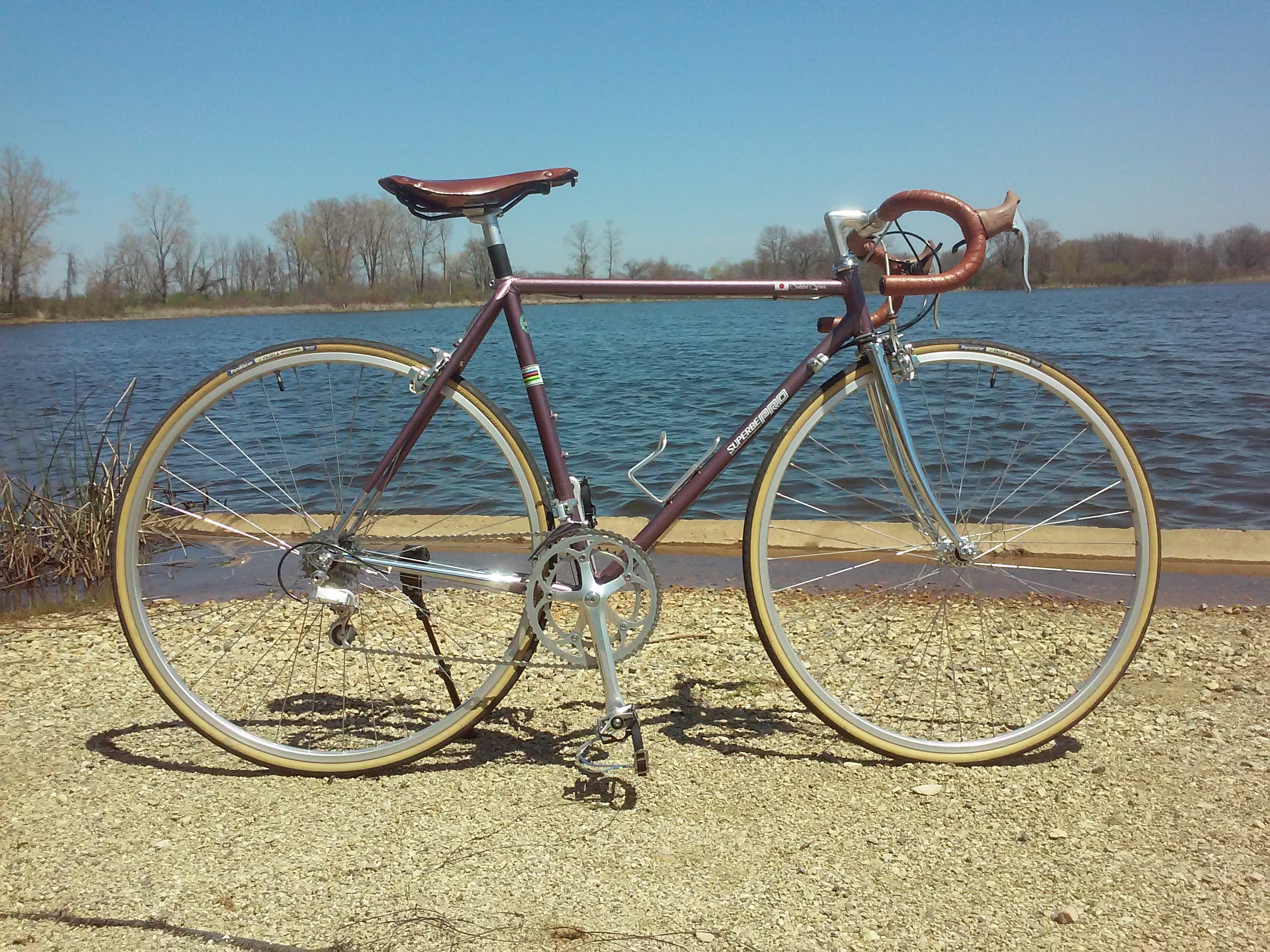 Click on Image for Enlarged Views & Click Back Arrow to Return My custom Fuji was given the
title "Sekkei Series" which translates into
"Design Series" in English, in honor of their
actual Design Series from the same time
period. Like my prior 1980 Fuji Newest this
bike is fully decked out in period correct Suntour
components. Indeed this is my most unique
bike simply due to it being one of a kind.
1984 Araya (Right) - My last daily rider is my orange Araya. This frame actually started out life as a metallic blue SR Maxima. Remember the SR company I started with above? When I got this frame it had been repainted a not to pretty multicolored streaked brown. I immediately had it stripped and powder coated a metallic orange. This bike I left essentially naked of decals or stickers and it only sports the Tange Champion #2 sticker on it upper seat post to identify the tubing. A bit about Araya, for many years they were the largest bike manufacturer in Japan, but never really sold their wares in America. They did for a time sell bike wheel rims here and those could often be found on BMX style bikes. As with my two prior daily drivers, I also stayed with my old favorite and this orange Araya sports Suntour components. However, where-as my other riders opted for the top line Superbe series, this one has a later second in-line Suntour Sprint series. Albeit, IMHO it is as good as the Suberbe stuff and even has what I view as a classier color and finish. The Suntour Sprint was introduced in 1986, so technically it wasn't even available until two years after the frame was made.  Click on Image for Enlarged Views & Click Back Arrow to Return As with my other two daily riders
this Araya also sports Suntour Superbe Pro rear
dropouts. I just feel that the
satin finish and gray they used on this Sprint
line is so classy.
Keeping it clean of decals I think adds to the mystique of this daily rider and I have no plans to change that. 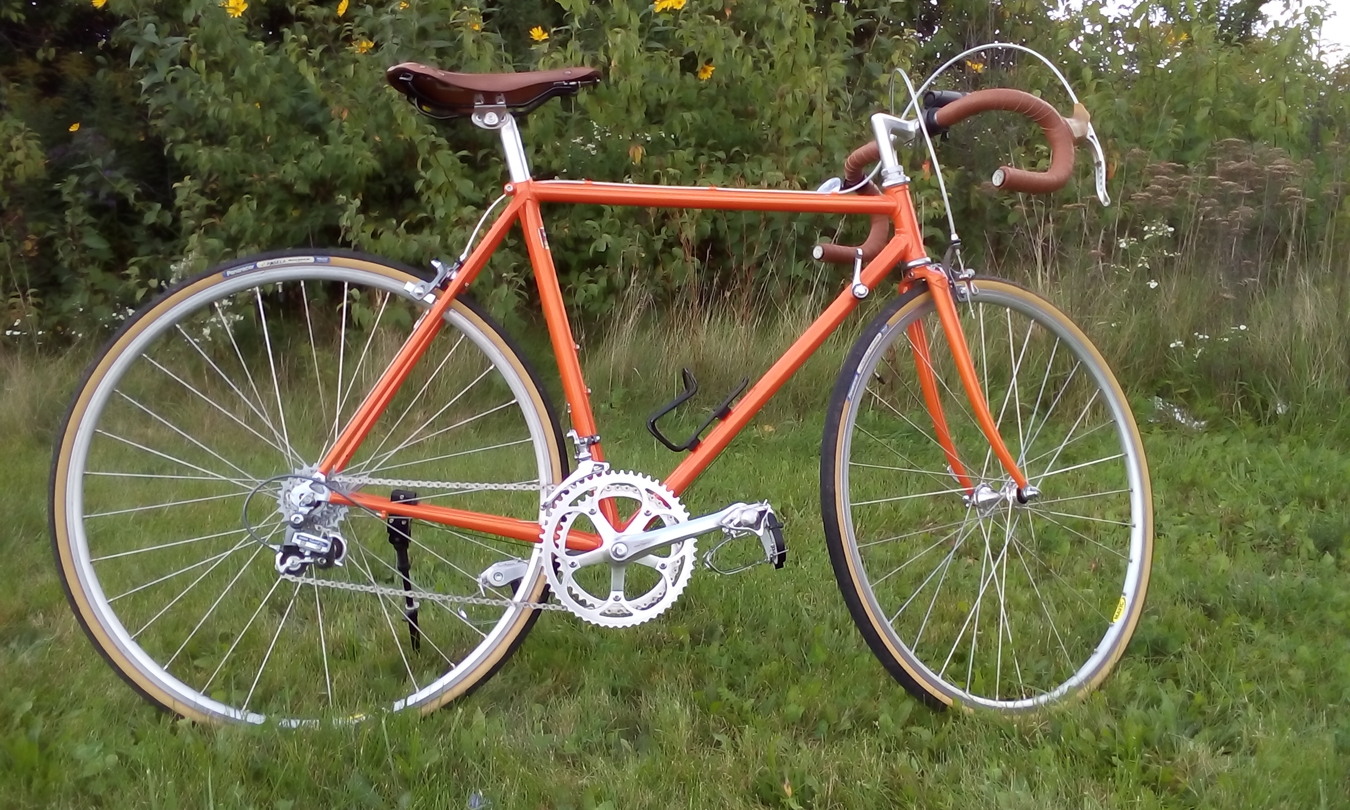 Click on Image for Enlarged Views & Click Back Arrow to Return One of my personal likes about refurbishing and riding these older steel frame bikes is when you come across an experienced rider who passes on a bike that cost perhaps five to ten times as much, and looks over and simply says "Nice Bike". My ride immediately becomes much easier the rest of that day - Big Smile! The Other Bikes I do have some non-Japanese bikes
too. In fact, my remaining riders are American
made.
1991 Cannondale SH-600
- I use this USA made aluminum bike for
short rides around my neighborhood, typically ten
miles or less. It would also get used on
some off-road trail rides too. This one is
all original hardware and just cleaned up and
aligned.
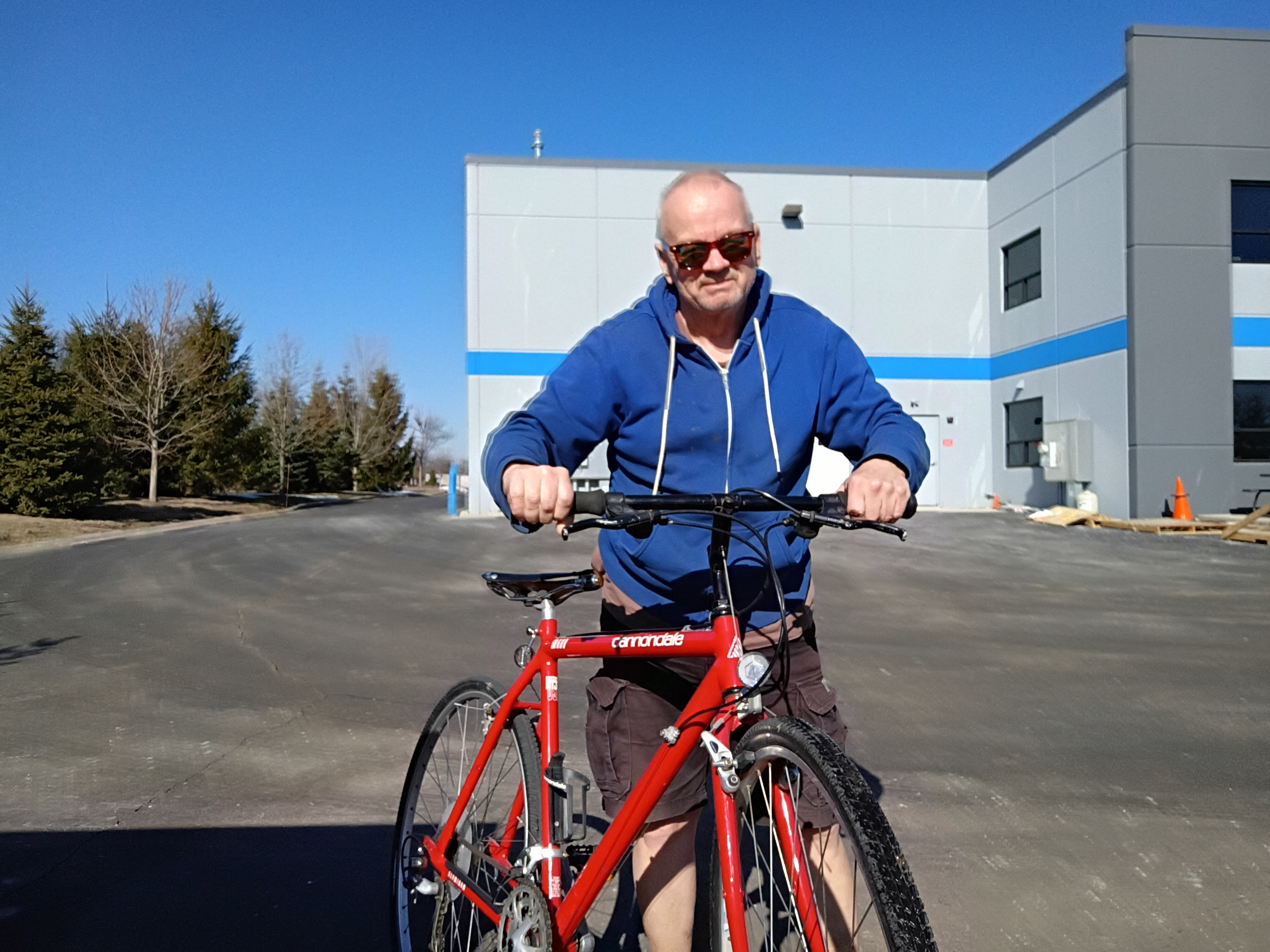 Click on Image for Enlarged Views & Click Back Arrow to Return Picture from February 2026 -
Early Season Nice Day Ride
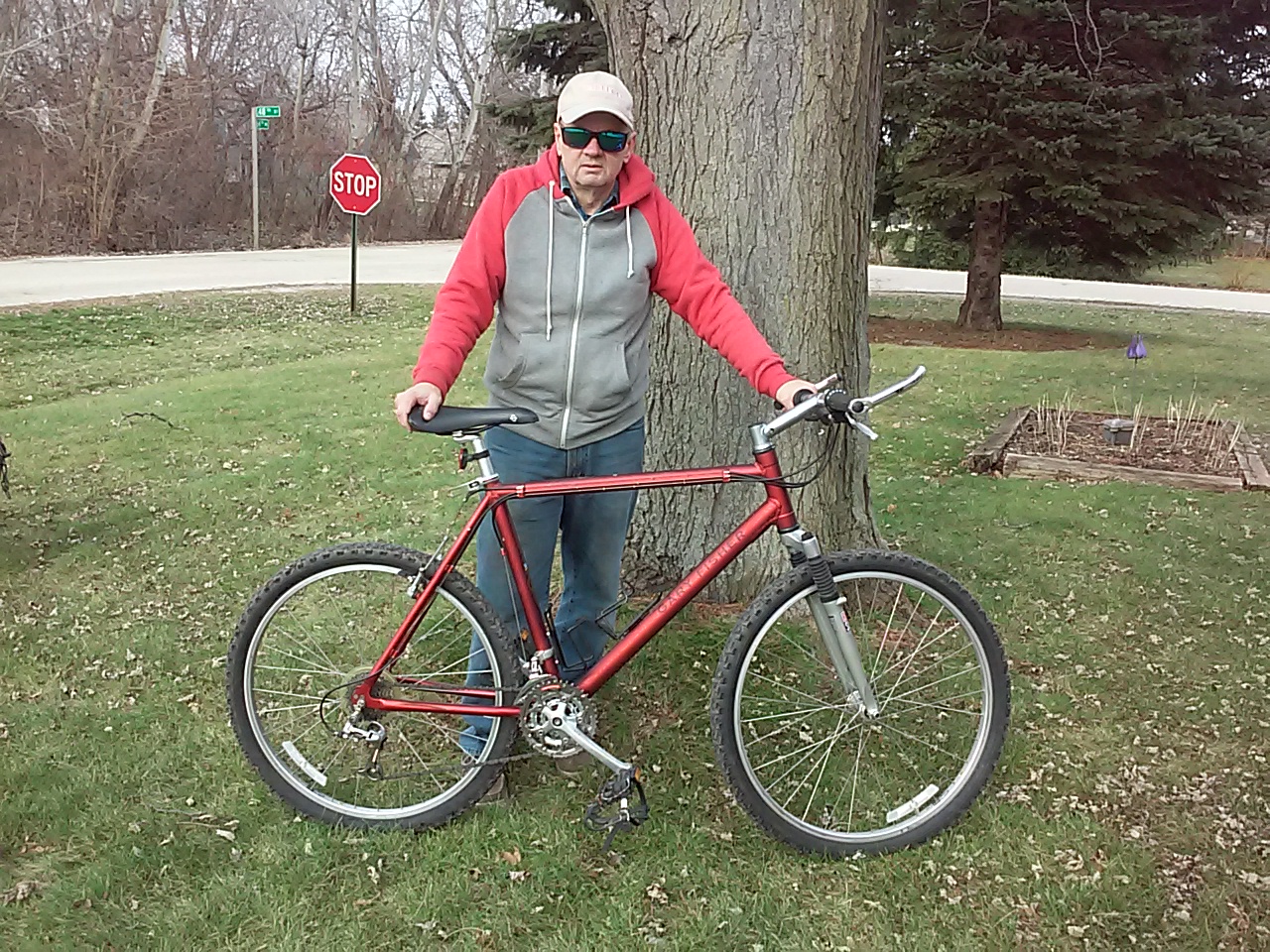
1995 Gary Fisher Kaitai
- Wow this is actually my newest bike!
I picked this up around ten years ago for a
really decent price. General cleanup and a
rebuild of the front fork/shock and it's able to
take me off road. I really don't do much
off road biking, but depending on terrain I
might just grab this old American made Gary
Fisher. It's just got that simple COOL!
 Click on Image for Enlarged Views & Click Back Arrow to Return Others - I do have a few other bikes. I keep a 1984 Bridgestone 500 on a fluid trainer stand in my family room to get exercise during the months when outside riding is not feasible here in Wisconsin. I did rebuild that bike using a full compliment of Shimano 7400 series Index Shifting gear from the mid-80's. That bike was my one adventure off the Suntour path in that the Bridgestone was actually a Suntour equipped bike originally. I just wanted to try the early generation Shimano Indexing. I was actually quite pleased with that full Shimano set. I give credit where credit is due. I also have a Japanese made 1982 Bianchi SS Sport. It's a mid-level bike that I'm sure Bianchi doesn't even want to admit ever existed. The Japanese invasion of bikes happened in the late 1970's well through the 1980's. For companies like Bianchi this was an attempt to stay relevant. Thankfully Bianchi is still around today. Final Notes
All my bicycles, that I do any real
mileage on, exclusively use Sella Anatomica
saddles. In most cases it is either their X1 or
X2 full leather models. If you do a great deal
of riding you'll want to keep your butt safe and pain
free too. I can't speak more highly about a bike
saddle than theirs and I've tried many along the
way. In spite their name, Sella
Anatomica saddles are American made.
All my Japanese road bikes also use Panasonic Panaracer Pasela ProTite tires. Appropriately Japanese manufactured! Normally 700C X 25mm. I use their gum walled version that looks very period correct for my bike ages. I build all my wheels on the road riders, but use more modern stainless steel spokes. I still retain period correct top-end Suntour hubs. Lights, lights, lights! I have a quick attach/release front light that goes from bike-to-bike. That same front mount also has my Garmin GPS on it. It is a very high power white LED rechargeable light that flashes to get the attention of people in front of me. Trust me, cars will see you coming and that is very important. On the rear side, just recently I went back to a light backpack vs the under the seat bag, I have a CATEYE brand high intensity rechargeable rear light too. That is always in a random flashing mode as well. I one time had a driver come up along side of me at a stop light and tell me he saw my bike from a mile back. He was complimenting my choice and that's exactly what I was looking for. Tools - I carry an extra inner tube and small pump that can get my tires up to around 110lbs. If your riding a newer bike with tubeless tires this might not be something you'll need. I also have tools that will allow me to make most repairs on the road. A year ago I had a brake cable snap on me, pulled right out of the end anchor. Naturally it was the rear brake, the one we use most. I had to ride another 40 miles that day always reminding myself to use the front brake. I now carry an extra brake inner cable, it weights essentially nothing, but it sure brings me comfort I won't have that issue again. Weight - I now try and carry only two or three pounds of extras with me. I ride mainly in busier areas and thus one water bottle is enough, as a refill location is often close by. My tools are carried in a very small backpack now. Originally when I started riding I also used a backpack, but I had it loaded down with a big bike lock and cable and after a year or two of that my shoulder started hurting. I then went to a smaller under the seat bag that I could easily move from bike-to-bike. That worked out fine, but I did have the strap my air pump to the outside of the bag as it was too long to fit inside. Starting in 2026, I am back to a smaller backpack that can hold my tools and pump easily inside, but I no longer carry the heavy lock and cable. If I stop anywhere they have to either let me bring my bike inside or I can stay outside with the bike. I will only eat or spend time at bike friendly spots. So far - So good! |
 Back to my homepage